September 19, 2026
Custom Sheet Metal Fabrication: What to Look for in a Manufacturing Partner
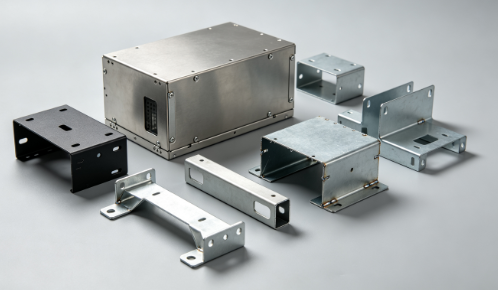
Table of Contents
Introduction
Define Your Requirements First – The Foundation of Evaluation
Technical Capability – Beyond "We Can Do It"
Quality Systems – From Certification to Execution
Process Control – The Difference Between Samples and Production
Engineering Support – DFM and Design Collaboration
Delivery Performance and Scalability
Material Integrity and Traceability
Communication and Responsiveness
Conclusion
Frequently Asked Questions (FAQ)
1. Introduction
Custom sheet metal fabrication is the backbone of countless industries—automotive, electronics, medical devices, industrial automation, and consumer goods. The components are everywhere: enclosures, chassis, brackets, panels, housings, and structural frames. But the quality of those components depends entirely on the capability of the manufacturing partner.
The difference between a partner that delivers consistent quality and one that causes production delays, rework, and scrap costs is not always obvious from a quote. Price is only one variable. The real evaluation requires a structured assessment of technical capability, quality systems, process control, engineering support, and operational reliability.
This guide walks through the key criteria for selecting a custom sheet metal fabrication partner.
2. Define Your Requirements First – The Foundation of Evaluation
Before evaluating any supplier, you must define your own requirements. This is the fundamental step that many buyers skip—and it is the root cause of most supplier disappointments [8†L4-L5].
What to specify before contacting suppliers:
Materials: Grade and specification (e.g., SS304, SS316, 6061 aluminum, cold-rolled steel). Thickness and finish requirements [3†L8-L9].
Tolerances: Linear tolerances, flatness, hole position tolerances. For reference, ISO 2768-m and GB/T 1804 are common industry standards for钣金 tolerances [0†L23-L25].
Surface finish: Powder coating, anodizing, plating, passivation, or painting. Specify color, gloss level, and film thickness (e.g., 60–80μm) [8†L9].
Functional requirements: Load-bearing capacity (e.g., no deformation under 100kg load), salt spray test duration (e.g., 48 hours no red rust), and other performance criteria [8†L9].
Regulatory compliance: RoHS, REACH, or industry-specific standards (e.g., IATF 16949 for automotive, AS9100 for aerospace) [8†L10].
With clear requirements, you can evaluate suppliers against specific criteria rather than vague claims.
3. Technical Capability – Beyond "We Can Do It"
A capable fabricator must offer integrated workflows covering the full spectrum of processes [9†L29-L31][1†L6-L7].
Core processes to verify:
Process | What to Check |
Laser Cutting | Fiber or CO₂ laser capacity. Tolerance typically ±0.1mm [3†L36]. Maximum sheet size and thickness (e.g., 6000×2000×20mm) [5†L16]. |
CNC Punching | Turret press capability, hole size range, minimum hole-to-edge distance. |
CNC Bending | Press brake tonnage. For 10mm thick steel, approximately 200 tons is required [8†L22]. Bend angle tolerance (±1° typical) [8†L24]. |
Welding | TIG, MIG, spot welding capabilities. Certified welders with relevant qualifications [8†L15-L16]. |
Surface Finishing | In-house or outsourced? Powder coating, anodizing, plating, electropolishing [9†L33]. |
Material compatibility: Verify that the supplier can handle your required materials—stainless steel (304, 316), aluminum alloys, brass, copper, or mild steel [9†L31-L32].
The "full-service" advantage: Suppliers with in-house capabilities across all processes reduce lead times, eliminate coordination risks, and maintain quality control across the entire workflow [4†L10].
4. Quality Systems – From Certification to Execution
Certifications are the starting point, not the end. ISO 9001 is the minimum standard, confirming that the supplier has a documented quality management system [2†L8-L9][2†L19-L20]. However, certification alone does not guarantee consistent quality [2†L13].
What to look for beyond certification:
Indicator | What It Tells You |
ISO 9001:2015 | Basic quality management system in place |
IATF 16949 | Automotive-grade quality (stricter than ISO) [2†L22] |
AS9100 | Aerospace-grade quality [4†L15-L16] |
ISO 13485 | Medical device quality [4†L18] |
First Article Inspection (FAI) | Formal approval of first production run [9†L42] |
Material traceability | Documentation linking each part to its material batch [9†L43] |
Ask for evidence of quality execution – not just certificates. Request inspection reports, process control documentation, and records of non-conformance and corrective actions.
5. Process Control – The Difference Between Samples and Production
The most common failure in custom sheet metal fabrication is the gap between samples and mass production. Samples often succeed because skilled operators handle them personally. Production fails because the process is not repeatable [6†L3-L7][6†L12-L14].
Key process control elements to verify:
Element | What to Check |
First-Article Inspection | Does the supplier perform a full dimensional check before production starts? [8†L24] |
In-process Inspection | Are there scheduled checks during production? What is the frequency? [2†L13] |
Final Inspection | What are the acceptance criteria? Is there a documented checklist? |
Process Documentation | Are bending compensation parameters, welding sequences, and fixturing standards documented and controlled? [6†L13] |
Batch Traceability | Can the supplier trace each batch back to raw material and process parameters? [6†L10-L11] |
A supplier that can demonstrate "first article confirmation, in-process sampling, and anomaly closure" is more likely to deliver consistent quality than one that only shows a certificate [6†L10-L11].
6. Engineering Support – DFM and Design Collaboration
The best fabrication partners do more than follow your drawings—they improve them. Design for Manufacturing (DFM) analysis identifies potential issues before production begins, saving time and cost.
What to look for in engineering support:
CAD file acceptance: Can they accept native CAD formats (STEP, DWG, DXF)? [10†L44]
DFM feedback: Do they provide manufacturability feedback within 24–72 hours? [9†L52-L53]
Design optimization: Can they suggest material, thickness, or feature changes that reduce cost without compromising function?
Prototyping capability: Do they offer rapid prototyping for design validation? [4†L6]
The difference between a supplier that simply "makes what you draw" and one that "helps you draw what can be made well" is the difference between a vendor and a partner.
7. Delivery Performance and Scalability
On-time delivery is a direct indicator of operational discipline. Suppliers with on-time delivery rates above 97% demonstrate strong scheduling and material planning [10†L50-L51].
Key metrics to request:
Metric | Target | Why It Matters |
On-Time Delivery | ≥97% | Indicates operational stability [10†L50-L51] |
Reorder Rate | >20% | Reflects customer satisfaction and trust [9†L40-L41] |
Response Time | ≤3–5 hours | Correlates with proactive communication [10†L54] |
Capacity | Matches your volume | Can they scale with your demand? |
A supplier that delivers on time, consistently, is a supplier that manages its processes, materials, and workforce effectively.
8. Material Integrity and Traceability
Material substitution is a real risk in custom sheet metal fabrication. A supplier that substitutes lower-grade materials—304 stainless replaced with 201, or a 0.2mm reduction in thickness—can compromise product strength and durability [7†L6-L7].
What to verify:
Material certificates: Request mill test reports (MTRs) for each batch [7†L7].
Traceability: Can they link each finished part back to its material batch? [9†L43]
Incoming inspection: Do they verify material specifications upon receipt?
If the supplier cannot provide material traceability, they cannot guarantee the material you specified is what you received.
9. Communication and Responsiveness
Technical capability is worthless if the supplier does not communicate clearly, promptly, and proactively.
Communication indicators to evaluate:
Response time: How quickly do they respond to inquiries? [10†L54]
Clarity: Do they ask clarifying questions about your requirements?
Transparency: Are they upfront about limitations, lead times, and risks?
Documentation: Do they provide clear quotes, specifications, and quality documentation?
A supplier who is responsive during the quoting phase is likely to be responsive during production and problem resolution.
10. Conclusion
Choosing the right custom sheet metal fabrication partner requires moving beyond price comparisons. The evaluation framework should cover five dimensions:
Technical capability – Does the supplier have the equipment and expertise for your specific processes and materials?
Quality systems – Are certifications backed by documented process control and traceability?
Process control – Can they repeat sample quality at production scale?
Engineering support – Do they provide DFM feedback and design collaboration?
Operational reliability – Do they deliver on time, communicate effectively, and maintain material integrity?
The right partner is not the cheapest—it is the one that delivers consistent quality, predictable lead times, and proactive support. In custom sheet metal fabrication, the cost of a bad partner is always higher than the price of a good one.
11. Frequently Asked Questions (FAQ)
Q: What certifications should I look for in a sheet metal fabrication partner?
A: ISO 9001 is the minimum standard. For automotive applications, IATF 16949 is required. For aerospace, AS9100 is necessary. For medical devices, ISO 13485 is relevant [2†L22][4†L15-L18]. However, certifications are only the starting point—process control and traceability matter more.
Q: How do I verify a supplier's quality beyond their ISO certificate?
A: Request process documentation, including first-article inspection reports, in-process inspection records, and non-conformance reports. Ask to see their quality control checklist and how they handle non-conforming parts. A supplier that cannot show documented process control cannot guarantee consistent quality [6†L10-L11].
Q: What is the most common problem in custom sheet metal fabrication?
A: The gap between sample quality and production quality. Samples are often made by experienced operators with extra care. Production requires repeatable processes. Verify that the supplier has documented process parameters, fixtures, and inspection points before you approve production [6†L12-L14].
Q: How do I avoid material substitution problems?
A: Require material test reports (mill test reports) with every shipment. Verify that the supplier conducts incoming inspection of raw materials. Specify material grade and thickness on your drawings and in your purchase order, and request traceability documentation linking finished parts back to material batches [7†L6-L7].
Q: What is DFM and why does it matter?
A: Design for Manufacturing (DFM) is the analysis of a design to identify potential manufacturing issues before production begins. A good fabrication partner will provide DFM feedback—suggesting changes to geometry, tolerances, or material selection that reduce cost and improve manufacturability without compromising function [9†L52-L53].
Q: What is a typical lead time for custom sheet metal parts?
A: Prototype lead times can be 3–5 days for simple parts. Production lead times depend on volume, complexity, and material availability. A reliable partner will provide clear lead time estimates and update you on any changes [4†L6].