November 4, 2026
Fixed Connector Sourcing in 2025: Trends Reshaping Metal Component Decisions
A buyer-focused look at how material traceability, tolerance expectations, and supplier integration are changing fixed connector sourcing, with practical checks for evaluating metal component suppliers.
Why fixed connector sourcing is being re-evaluated
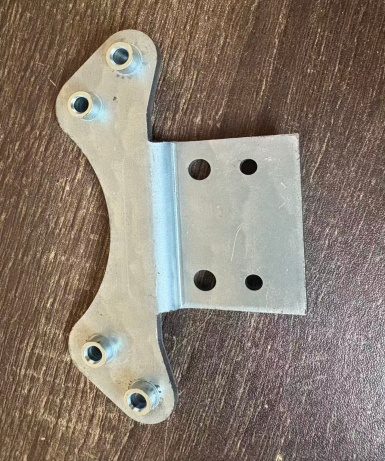
A fixed connector is a metal component that holds two parts in a set position, typically through a formed bracket, stamped plate, or machined interface. Buyers usually source it as part of a larger metal assembly, alongside items such as a vehicle tow hook cover or a fan motor mounting bracket. The sourcing decision is rarely about the connector alone. It is about whether the supplier can hold position, material, and finish across a batch, and whether the documentation supports the assembly line.
Three shifts are visible in how buyers approach this category. First, material and process documentation is being requested earlier in the quoting stage. Second, tolerance expectations are being tied more explicitly to assembly function rather than to a generic drawing default. Third, buyers are consolidating metal component orders to reduce the number of suppliers they need to audit. None of these shifts is universal, and the pace varies by region and end market. The practical response is to build checks into the sourcing process rather than assume a supplier's default process will match your assembly.
Trend 1: Documentation moves from afterthought to quote requirement
Inquiries for fixed connectors increasingly include requests for material certificates, finish specifications, and inspection records before a purchase order is placed. This is a qualitative observation from buyer behavior in metal component sourcing, not a measured market statistic. The underlying driver is traceability: if a connector fails in assembly, the buyer needs to know which material lot and which production run were involved.
For a fixed connector, the documents that matter most are the ones that tie a physical part to a specification. Ask for the material grade and thickness on the drawing, the finish type and coating weight where relevant, and the inspection method used for critical dimensions. If a supplier cannot state these in the quote, the gap will usually surface later as a clarification delay or a rejected lot.
What to request at the quote stage
Material grade and thickness, stated on the drawing and confirmed in the quote.
Finish type and any coating or plating specification, with the standard referenced.
Inspection method for critical dimensions, such as gauge, caliper, or CMM.
Sample approval process and the lead time for first-article submission.
Batch identification method, so finished connectors can be traced to a production run.
These requests are not unusual in metal fabrication, but they are often skipped when a connector is treated as a low-value line item. The cost of skipping them appears at assembly, not at receiving.
Trend 2: Tolerance is being tied to assembly function
Fixed connectors are position-critical by definition. A connector that is within a generic tolerance but outside the assembly's stack-up can still cause a line stoppage. Buyers are responding by specifying tolerances on the features that affect position, rather than applying a single tolerance block to the whole drawing.
This changes the conversation with the supplier. Instead of asking whether the supplier can hold ±0.1 mm everywhere, the buyer identifies the mounting hole position, the mating face, and the fastener clearance as critical features, and asks the supplier to confirm capability on those features specifically. The supplier can then choose the process route, such as laser cutting plus bending or stamping, based on what the critical features require.
A practical tolerance review sequence
List the features that determine connector position in the assembly.
Assign each feature a tolerance based on the assembly stack-up, not on a drawing default.
Ask the supplier which process step controls each critical feature.
Confirm the inspection method can measure the feature at the stated tolerance.
Review first-article results against the critical features before approving production.
This sequence is more work at the drawing stage and less work at the assembly stage. It also gives the buyer a clear basis for comparing suppliers: two quotes may look similar until the critical features and inspection methods are compared side by side.
Trend 3: Supplier consolidation across related metal parts
Buyers who need a fixed connector often need related metal parts in the same program, such as a vehicle tow hook cover or a mounting bracket. Consolidating these parts with one supplier can reduce audit overhead, simplify logistics, and make tolerance relationships between mating parts easier to manage. The trade-off is dependency: a single supplier's capacity constraint or quality issue affects the whole group of parts.
The consolidation decision should be based on process overlap, not on catalog breadth. A supplier that runs laser cutting, bending, and stamping can often cover a connector, a bracket, and a cover in one production flow. A supplier that only trades metal parts adds a coordination layer without adding process control. Ask how the parts will be produced, not just whether they can be supplied.
Decision factor | Consolidated supplier | Separate suppliers per part |
|---|---|---|
Audit and documentation | One quality system to review | Multiple systems, more review time |
Mating-part tolerance | Can be managed in one process plan | Requires cross-supplier coordination |
Capacity risk | Concentrated in one supplier | Spread across suppliers |
Logistics | Fewer shipments and touchpoints | More shipments and coordination |
Process fit | Depends on overlapping capabilities | Each part matched to a specialist |
The table is a starting point, not a rule. A program with a single critical connector and a long-life bracket may be better served by separate specialists. A program with several mating metal parts usually benefits from consolidation if the supplier's processes overlap.
What these trends mean for the fixed connector buyer
The common thread is that fixed connector sourcing is becoming a documentation and process-fit exercise rather than a price comparison. That does not mean price is irrelevant. It means the lowest quote is only comparable when the material, finish, tolerance basis, and inspection method are stated in the same terms.
A buyer can act on this by preparing a short sourcing brief before sending inquiries. The brief should state the connector's function, the critical features, the mating parts, the expected batch size, and the documentation required. Suppliers can then quote against the same scope, and the buyer can compare responses without re-interpreting each one.
Questions to ask before approving a fixed connector supplier
Which process steps produce the critical features, and how are they controlled?
What material and finish documentation will accompany each batch?
How are first articles measured and reported against the critical features?
What changes if the connector is ordered together with a mounting bracket or tow hook cover?
What is the supplier's stated scope for inspection, and what is left to the buyer?
These questions are designed to surface gaps early. A supplier that answers them specifically is easier to audit and easier to hold to a specification. A supplier that answers them generically is a signal to request a sample and a first-article plan before committing to production volume.
Limitations and what this article does not claim
This article describes sourcing considerations and qualitative trends. It does not provide market size, growth rates, price levels, lead times, or regulatory requirements for any region, because no dated source was supplied for those claims. Buyers should verify material standards, finish specifications, and inspection requirements against their own drawings and end-market obligations. Supplier capabilities should be confirmed directly with the supplier, not inferred from a product listing or a company name.